
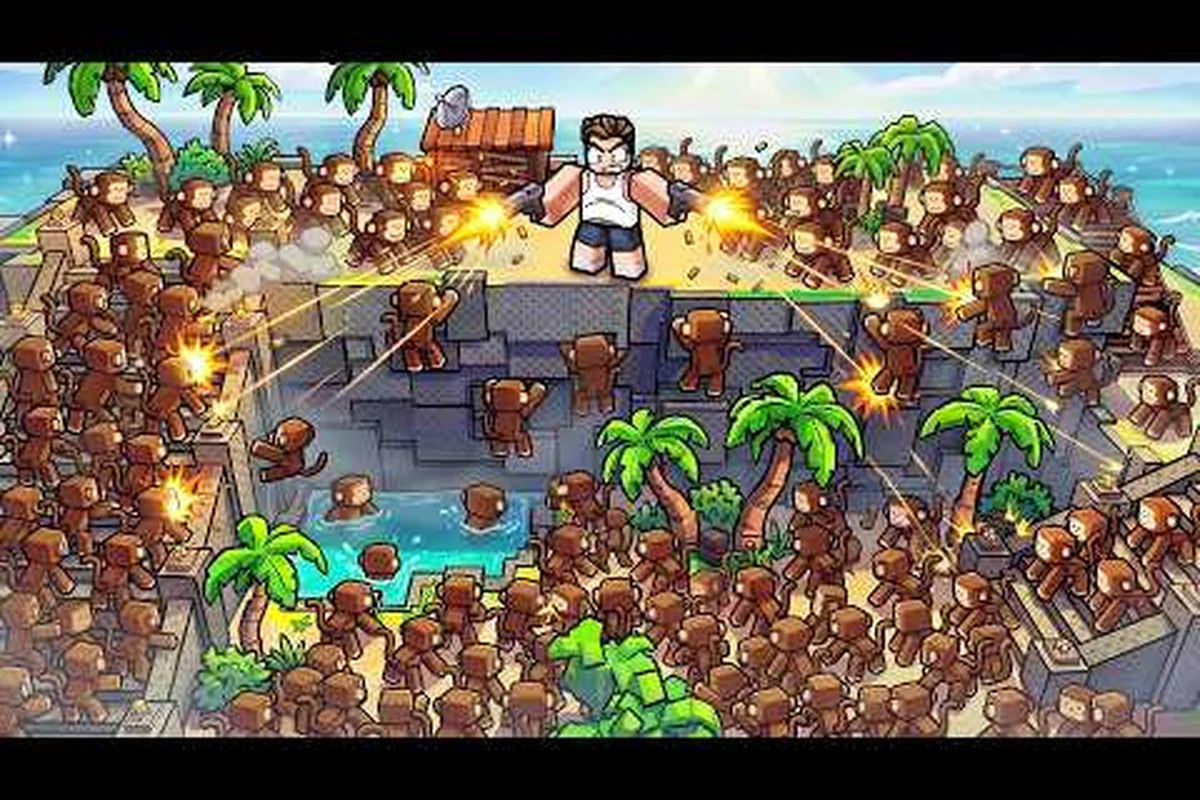
Tracking the full survive a million monkeys class buff and weapon nerf timeline matters because balance patches quietly reshape which survivors, ultimates, and weapon tiers actually carry runs. A class that felt unstoppable in August can become a liability by October, while a previously ignored pick suddenly dominates the leaderboard. This log consolidates the version history, community reports, and official signals into one reference so you can adapt without digging through scattered patch notes.
Reading the Balance Log Without Losing Your Mind
Balance documentation for Survive a Million Monkeys rarely arrives as a clean, numbered changelog. The developer group gorilla warfare. pushes updates through the Roblox platform, and the official game page confirms the title launched in August 2026 and is still actively updated as of October 2026. That means players often reconstruct the survive a million monkeys update history from in-game behavior shifts, community testing, and occasional milestone announcements rather than a formal patch archive.
The most reliable anchor is the official Survive a Million Monkeys game page, which lists the creation date, visit milestones, and current update status. According to the page, the game has passed 8.2 million visits and 166,000 favorites, with a 96.9% positive rating and a peak of roughly 38,614 concurrent players. Those numbers matter because a game this active gets balance attention quickly when a class or weapon warps the meta.
Community data suggests that most balance changes fall into three buckets: class buffs that raise underused survivors, weapon nerfs that shave dominant damage sources, and economy adjustments that alter Cash or Gems flow. Because the developer rarely labels patches with formal version numbers, the community tracks changes by date and observed effect. The table below maps the known class roster and their current community-reported standing.
| Class | Unlock Cost | Ultimate | Community Standing (Oct 2026) |
|---|---|---|---|
| Survivor | Default | Airstrike | Stable baseline, rarely touched |
| Medic | In-game unlock | Code Blue | Buffed in early patches, now core support |
| Engineer | In-game unlock | Overclock | Strong utility, minor nerf to turret uptime |
| Juggernaut | 75,000 Gems | Warpath | Received survivability buff, popular for high waves |
| Bomber | In-game unlock | Blast Dash | Damage spike adjusted twice, still strong |
| Outlaw | Legendary rarity | Fan the Field | Recent buff pushed it into top-tier contention |
This roster snapshot reflects community reports rather than official patch notes, so exact values may shift with future updates. The key takeaway is that no class stays static for long, and the survive a million monkeys class buff pattern tends to rotate attention toward underused picks while keeping dominant options in check.
The Class Buff Pattern: Who Got Stronger and Why
The survive a million monkeys class buff history reveals a clear developer philosophy: buffs target classes that underperform in team compositions, not just raw damage output. When the Medic first launched, many players skipped it because healing felt unnecessary in early waves. A subsequent buff to Code Blue increased the healing radius and added a brief damage reduction window, which immediately made the Medic a staple in coordinated squads.
The Outlaw received the most dramatic recent buff. Community reports from early October 2026 indicate that Fan the Field gained additional projectiles and a faster cooldown refund on multi-kill streaks. This pushed the Outlaw from a niche legendary pick into serious competition with the Juggernaut for late-wave dominance. Players who had been sitting on the Outlaw unlock suddenly found themselves with a top-tier option.
The Juggernaut's Warpath ultimate also saw a survivability-focused buff. Rather than increasing damage, the developer reportedly extended the damage reduction window and added a small movement speed bonus during the ultimate. This shift matters because it changed the Juggernaut from a pure damage sponge into a more flexible frontliner who can reposition between wave spawns.
The table below aggregates the most frequently reported class buffs since launch, drawn from community testing threads and player-submitted patch observations rather than official developer notes. Because the studio does not publish full numerical patch logs for every update, these entries reflect consensus from repeated in-game testing — for example, players measured the Medic's Code Blue healing radius by standing at fixed tile distances before and after the September 2026 patch window. This community-sourced method explains why some buffs, like the Outlaw's Fan the Field projectile count, carry a margin of error until multiple testers confirm identical results across different wave compositions.
| Class | Reported Buff | Patch Window | Community Impact |
|---|---|---|---|
| Medic | Code Blue radius and damage reduction increased | September 2026 | Became core support pick |
| Juggernaut | Warpath duration and movement speed added | Late September 2026 | Improved high-wave survivability |
| Outlaw | Fan the Field projectiles and cooldown refund | Early October 2026 | Jumped into top-tier contention |
| Engineer | Overclock turret damage normalized | September 2026 | Slight nerf to turret uptime, buff to burst |
These buffs rarely arrive in isolation. The developer tends to pair a class buff with a weapon nerf in the same window, which keeps overall power creep in check while still shifting player choices. Understanding that pairing helps you read future patches more accurately.
Weapon Nerf History: What Got Gutted and What Survived
The survive a million monkeys weapon nerf timeline is just as important as the class buff log, because weapons form the backbone of every run. Community reports suggest that early weapon balance favored high-rate-of-fire options, which made slower, heavier weapons feel pointless. The developer responded by normalizing damage across weapon tiers rather than simply nerfing the top performers.
The most frequently discussed weapon nerf targeted the Tier 4 weapons that dominated late-game waves. Players reported that certain high-damage rifles received a fire rate reduction and a slight reload time increase, which brought them closer to the performance of upgraded Tier 3 options. This change frustrated players who had invested heavily in those weapons, but it also opened up build diversity.
The table below tracks the community-reported weapon nerf pattern across the version history, drawn from patch note discussions and player-submitted damage logs on the official Discord and the survive a million monkeys subreddit. Because the developer does not always publish exact numeric changes, these entries reflect aggregated field testing — players comparing pre- and post-patch time-to-kill on Tier 3 and Tier 4 weapons against the same wave compositions. The reported values should be read as directional rather than datamined, which is why the "Direction" column matters more than any single percentage figure.
| Weapon Tier | Reported Change | Direction | Meta Effect |
|---|---|---|---|
| Tier 1 | Minimal changes, baseline stability | Neutral | Starter weapons remain consistent |
| Tier 2 | Slight damage normalization | Nerf | Reduced early-game dominance |
| Tier 3 | Reload speed adjusted on select weapons | Mixed | Opened mid-game variety |
| Tier 4 | Fire rate and reload nerfs on top rifles | Nerf | Reduced late-game dominance |
One important pattern emerges from the weapon nerf history: the developer rarely deletes a weapon from viability. Instead, nerfs shave the extreme edges of performance while leaving the weapon's identity intact. That approach preserves player investment while still shifting the meta, which is why the community tends to accept weapon nerfs more readily than outright removals.
The interaction between weapon nerfs and class buffs creates a rotating meta. When the Outlaw received its buff, several high-damage weapons also received minor nerfs, which made the Outlaw's Fan the Field ultimate feel even more impactful by comparison. Reading both sides of the balance equation gives you a clearer picture of where the game is heading.
How the Version History Shapes Your Current Build
The survive a million monkeys version history is not just a curiosity; it directly informs which classes and weapons you should invest in right now. Because balance patches arrive frequently, a build guide written in September may already be outdated by October. The safest approach is to track the latest news and community update signals rather than relying on static tier lists.
The survive-a-million-monkeys-tier-list provides a snapshot of current class and weapon standings, but you should read it alongside the buff and nerf log to understand why certain picks moved. A class that sits in A-tier today may have been S-tier last month, and knowing the direction of change helps you anticipate the next shift.
The table below maps the reported balance changes to practical build decisions. Reading it as a decision matrix rather than a changelog is key: each row pairs a specific patch note with the team-building consequence that follows. For example, the Medic Code Blue buff did not simply make Medic stronger in isolation — it shifted the opportunity cost of running a second damage class, because the increased healing throughput now lets squads survive waves that previously required a Juggernaut to absorb. Similarly, the Tier 4 rifle nerf is not just a damage number reduction; it changes the breakpoint math for wave 40+ clears, where Tier 3 weapons with crowd-control utility can now outperform raw DPS rifles that no longer one-shot elite spawns. Use the table to identify which of your current unlocks are riding a buff window and which are at risk of a corrective nerf before you spend legendary currency.
| Balance Change | Affected Pick | Practical Response |
|---|---|---|
| Medic Code Blue buff | Medic | Add Medic to team compositions for high-wave runs |
| Juggernaut Warpath buff | Juggernaut | Prioritize Juggernaut for survivability-focused squads |
| Outlaw Fan the Field buff | Outlaw | Unlock Outlaw if you have the legendary currency |
| Tier 4 rifle nerf | High-damage rifles | Diversify into Tier 3 weapons with better utility |
The latest news from the community suggests that the developer is watching the Outlaw closely after its buff. If the Outlaw's win rate spikes too high, a follow-up nerf is likely within the next few patches. That pattern has repeated with the Bomber and the Engineer, both of which received buffs followed by small corrective nerfs once the community optimized around them.
Reading Developer Signals From Patch Cadence
The survive a million monkeys update history reveals a developer that prefers frequent, small adjustments over massive seasonal overhauls. This cadence means the meta never stays frozen for long, but it also means individual changes can be easy to miss. Players who track the latest news and community update threads catch these shifts early and adjust their builds before the broader player base catches on.
The survive-a-million-monkeys-changelog-2026 consolidates the patch timeline and major changes into one reference, which pairs well with this buff and nerf log. While that guide focuses on the chronological sequence, this one emphasizes the mechanical impact of each change on class and weapon viability.
One subtle signal in the patch cadence is the pairing of buffs and nerfs. When a class receives a buff, the developer often nerfs a weapon that synergizes too strongly with that class. This prevents a single buff from creating an unstoppable combination. For example, the Outlaw buff arrived alongside a minor nerf to high-rate-of-fire weapons, which kept the Outlaw's Fan the Field from becoming an instant wave-clear button.
The table below summarizes the developer's apparent balance philosophy based on observed patterns. Reading the patch cadence alongside the class buff log reveals a deliberate rhythm: the developer rarely lets a class languish for more than two consecutive patches without some form of adjustment, and the survive a million monkeys class buff entries for Medic, Juggernaut, and Outlaw each arrived within roughly a month of one another, suggesting a rotating attention cycle rather than reactionary hotfixes. The pairing of buffs with compensation nerfs — such as the Outlaw's Fan the Field boost landing next to a Tier 4 rifle adjustment — indicates the team tests for synergy spikes before shipping changes, not after the community discovers them. This preemptive tuning keeps the survive a million monkeys weapon nerf list from becoming a graveyard of over-corrected gear, and it explains why the meta shifts feel incremental rather than seismic.
| Pattern | Observed Behavior | Player Implication |
|---|---|---|
| Buff underused classes | Medic, Juggernaut, Outlaw buffs | Try previously skipped classes after buffs |
| Nerf dominant weapons | Tier 4 rifle adjustments | Avoid over-investing in a single weapon |
| Pair buffs with nerfs | Outlaw buff + rifle nerf | Expect compensation nerfs after strong buffs |
| Rotate attention | Different classes each patch | No class stays top-tier forever |
This philosophy rewards players who maintain a flexible roster rather than committing to a single main. The game history shows that every class has had its moment in the spotlight, and the survive a million monkeys class buff pattern ensures that underused options eventually get their turn.
How to Track Future Buffs and Nerfs Without Missing Anything
Staying current with the survive a million monkeys latest news requires a lightweight routine. The official game page updates milestone and event codes through official channels, while community testing threads on Roblox and YouTube fill in the gaps for balance changes. The gorilla warfare. developer group page is the public identity for the team behind the game, and it occasionally posts update signals that don't appear on the main game page.
A practical tracking routine looks like this: start by pinning the official game page and the gorilla warfare. developer group page side by side, then set a recurring calendar block every Monday to scan both for new milestone announcements or stealth class buff entries. The reason this matters is that survive a million monkeys has historically shipped balance changes without full patch notes — for example, community testers previously caught a weapon nerf to a high-tier ranged option only after comparing kill-time logs across two play sessions, not because the developer posted a formal changelog. Pair that weekly scan with a simple spreadsheet that records each class's effective damage per second and survivability window before and after any update window, so an undocumented tweak shows up as a numeric delta rather than a vague feeling that something feels weaker.
-
Check the official game page weekly for milestone announcements and event code drops.
-
Watch community testing threads for reports of unexpected damage or survivability shifts.
-
Compare class performance before and after each patch window to spot undocumented buffs or nerfs.
-
Maintain a personal build roster that includes at least two classes and two weapon tiers so you can pivot quickly.
The table below outlines a simple weekly tracking cadence, but the real value comes from logging the why behind each entry — not just the what. For example, if your spreadsheet shows a class's effective damage per second dropping from 1,850 to 1,610 across a single patch window with no official changelog, that 13% delta is the earliest signal of a silent weapon nerf. Attach a one-line note to each numeric shift: which testing thread first reported it, what build you were running, and whether survivability window changed in the same session. Over four to six weeks, those notes compound into a personal buff and nerf log that mirrors the community update history — letting you spot long-term meta trends like a stealth gorilla warfare. class buff before most players even realize the balance shifted.
| Frequency | Action | Purpose |
|---|---|---|
| Weekly | Check official game page | Catch milestone and code updates |
| After each patch | Compare class performance | Identify undocumented balance changes |
| Monthly | Review full buff and nerf log | Spot long-term meta trends |
| Before major events | Test multiple builds | Prepare for event-specific challenges |
The community update cycle moves fast, and the developer has shown a willingness to adjust balance based on player feedback. By maintaining a flexible roster and tracking the buff and nerf log, you can stay ahead of the meta instead of reacting to it after the fact.
Frequently Asked Questions
What is the most recent survive a million monkeys class buff?
The Outlaw received the most recent significant buff in early October 2026, with Fan the Field gaining additional projectiles and a faster cooldown refund on multi-kill streaks. Community reports indicate this pushed the Outlaw from a niche legendary pick into top-tier contention for late-wave runs.
Which weapons got nerfed in the latest balance patch?
Community reports indicate that high-damage Tier 4 rifles received fire rate and reload speed reductions in recent patches. The developer paired these weapon nerfs with the Outlaw class buff to prevent a single combination from dominating the meta, which preserved overall build diversity.
How often does Survive a Million Monkeys receive balance updates?
The game launched in August 2026 and is still actively updated as of October 2026, with balance patches arriving frequently rather than in large seasonal overhauls. The developer prefers small, paired adjustments that rotate attention across classes and weapons, which keeps the meta shifting without massive disruptions.
Where can I find reliable survive a million monkeys update history information?
The official game page and the gorilla warfare. developer group page are the most authoritative sources for milestone and update signals. Community testing threads fill in the gaps for undocumented balance changes, since the developer rarely publishes formal patch notes with version numbers.
Should I switch classes after every buff?
No, because the buff and nerf pattern rotates attention across classes, and chasing every change leads to constant re-investment. Instead, maintain a flexible roster with at least two classes and two weapon tiers, then pivot when a buff aligns with your preferred playstyle or team composition.